How to Choose the Right Potting Mix for Pots, Raised Beds, and Planter Troughs
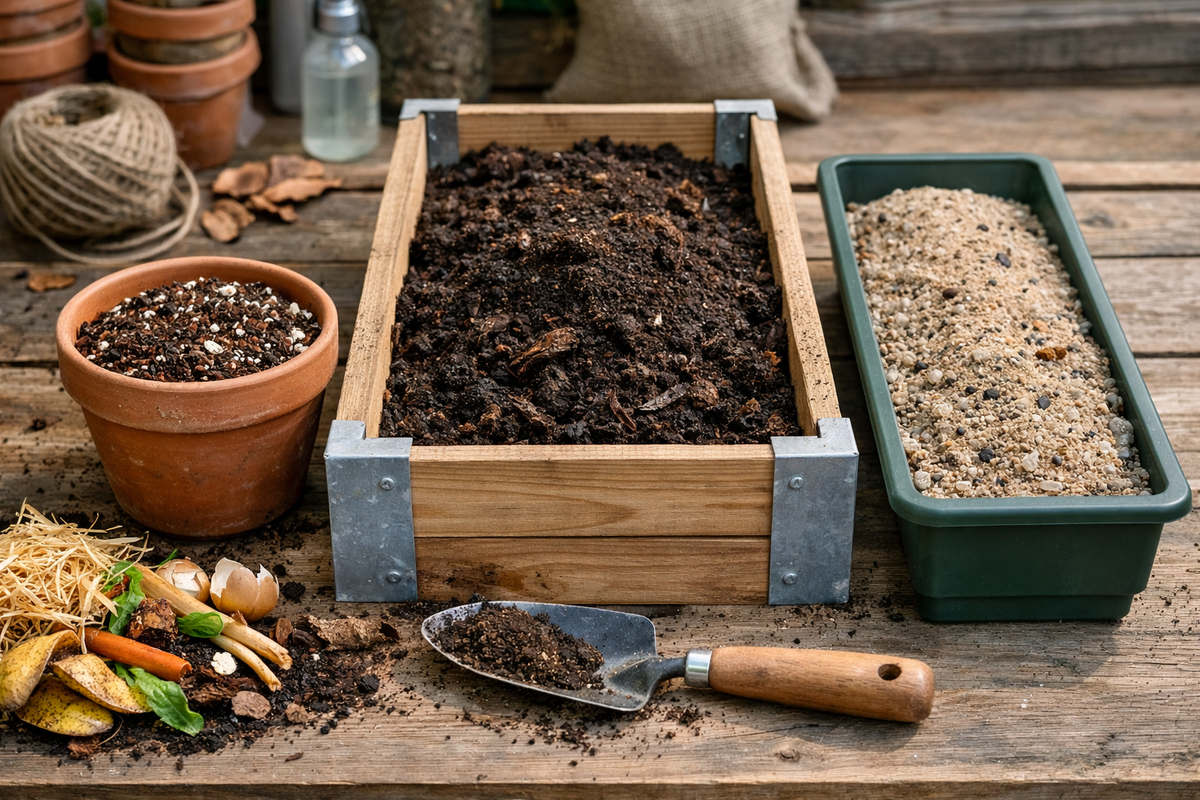
If plants are struggling in containers or raised beds, the issue is often not sunlight or fertilizer—it’s the mix. The “soil” you use in a pot behaves very differently from ground soil because it has limited volume, heats up faster, dries out quicker, and can become waterlogged if the texture is wrong. Choosing the right potting mix is the simplest way to get stronger roots, healthier foliage, and fewer watering headaches.
This guide breaks down what to look for in potting mix for pots, raised beds, and planter troughs, plus the common mistakes that cause failure.
The Big Rule: Don’t Use Garden Soil in Pots
It’s tempting to shovel in garden soil because it’s “real dirt,” but in containers it usually compacts, drains poorly, and suffocates roots. Pots need a mix that holds moisture and drains well while staying fluffy over time.
A good potting mix is engineered for:
-
air pockets (oxygen for roots)
-
consistent moisture (not drying instantly, not staying soggy)
-
structure (doesn’t collapse into sludge after a month)
If a bag is labelled “potting mix,” that’s a start—but quality varies a lot, so it pays to read the label.
What to Look for in a Quality Potting Mix
-
Drainage + Water-holding Balance
You want a mix that wets evenly and drains freely. If water runs straight through immediately, it may be too coarse or hydrophobic. If it stays wet for days, it’s too dense. -
Wetting Agents (helpful, not magic)
Many mixes include wetting agents to help water soak in—useful, especially in hot weather. But they don’t fix poor structure. -
Organic Matter + Stable Particles
Look for ingredients that provide both nutrition and structure—like composted bark, coir (coconut fibre), and quality compost.

Choosing Potting Mix for Standard Pots
Pots dry out fast, especially in sun and wind. For most ornamental plants, herbs, and patio greenery, choose a premium potting mix designed for containers.
Best mix traits for pots:
-
holds moisture without turning muddy
-
includes coarse particles for airflow (bark/perlite)
-
suitable for your plant type (e.g., “citrus & fruit,” “indoor,” “succulent”)
Quick matching tips:
-
Leafy plants + flowering annuals: premium all-rounder mix, consistent moisture.
-
Succulents/cacti: cactus/succulent mix or add extra drainage materials.
-
Citrus/fruit in pots: citrus mix or premium mix with added drainage and regular feeding.
Avoid very cheap mixes for long-term pots—they often break down quickly and shrink, leaving roots stressed.
Choosing Soil for Raised Beds (It’s Not the Same as Potting Mix)
Raised beds sit between containers and in-ground gardens. They drain better than ground soil but hold more volume than pots. Raised beds work best with a raised bed mix (often a blend of topsoil, compost, and coarse organics) rather than straight potting mix, which can be too light and expensive in large volumes.
Ideal raised bed blend:
-
quality topsoil or loam base
-
compost for nutrients
-
coarse organics (like composted bark) for structure and drainage
Practical Guideline: raised beds need a mix that won’t collapse or become waterlogged. If your raised bed is deep and you grow vegetables, a richer, more soil-like blend usually performs better than ultra-light potting mix.

Choosing Mix for Planter Troughs (Screens, Hedges, and Long Runs)
Planter troughs are common for privacy screens, commercial landscaping, and clean-line designs. They can be tricky because long planters often experience uneven watering—one end stays wet, the other dries out.
What troughs need:
-
a mix that drains well but doesn’t dry too fast
-
stable structure for roots over time
-
consistent moisture retention (mulch helps a lot)
For troughs with screening plants (like bamboo, viburnum, or lilly pilly), choose a high-quality container mix and improve it for long-term performance:
-
add compost for biology and nutrition
-
ensure plenty of aeration particles for roots
-
finish with a mulch layer to slow drying
Also make sure the trough has proper drainage holes and isn’t sitting in a water-trapping tray.

Common Mix Mistakes (That Cause Most Failures)
-
Using garden soil in pots → compaction, poor drainage, root rot
-
Overloading drainage rocks at the bottom → can create a perched water table effect; better to use the right mix throughout
-
Ignoring mulch → containers dry out faster and fluctuate in temperature
-
No ongoing feeding → potting mixes run out of nutrients; slow-release + liquid feeding helps
- Buying the cheapest mix for long-term plantings → breaks down fast, causes stress
Final Takeaway
Choosing the right potting mix is about matching the mix to the job: premium potting mix for pots, raised bed blend for raised beds, and a stable, moisture-balanced container mix for trough planters. If you get the structure right—airy, well-draining, and moisture-holding—plants become easier to maintain, grow faster, and stay healthier with less effort.