Best Screening Plants for Privacy in NSW Gardens: Fast, Dense & Low-Maintenance
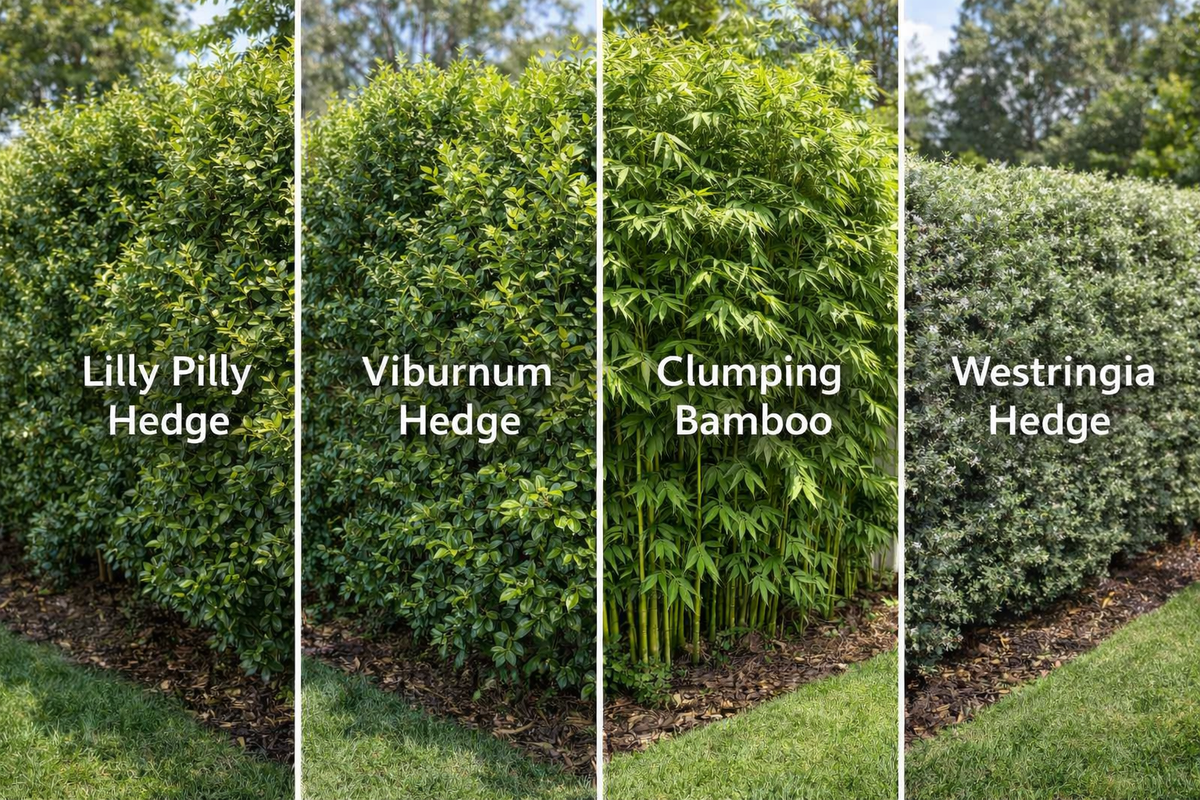
If you’re in NSW and want more privacy—blocking a neighbor’s window, softening a fence line, or creating a greener backyard—choosing the right screening plant makes all the difference. NSW gardens vary hugely (coastal wind, humid subtropics, inland heat, frost pockets), so the “best” plant is the one that matches your conditions and gives you a dense screen without constant trimming.
Below are reliable, fast, and relatively low-maintenance screening plants that perform well across many NSW settings.
What Makes a Great Privacy Screen Plant?
A good screening plant does three things well:
- Grows fast enough to give results within 1–2 seasons
-
Stays dense from top to bottom (not bare-legged)
-
Handles local conditions (coastal salt, heat, humidity, or frost)
Before buying, check: sun hours, drainage, wind exposure, and how tall you actually need the screen to be (2m? 4m? taller?).

1.) Lilly Pilly (Syzygium varieties): The Classic NSW Privacy Hedge
If you want a lush, evergreen hedge that thickens quickly, Lilly Pilly is the go-to. Many cultivars (like Syzygium australe selections) are bred for hedging: dense foliage, good regrowth after trimming, and attractive new growth.
Why it’s great: fast, thick, evergreen, responds well to shaping.
Low-maintenance tip: mulch well and water deeply while establishing; prune lightly 2–4 times a year for maximum density.
Watch-outs: some varieties can get psyllid (pimple-like leaf distortion). Choosing psyllid-resistant cultivars helps.
2.) Bamboo Gracilis: Tall, Elegant, and Surprisingly Tidy
For a taller screen with a softer, modern look, clumping bamboo like Bamboo Gracilis is a strong option. It grows upright, can create an effective privacy wall, and doesn’t have the runner problems of running bamboo types.
Why it’s great: fast privacy, vertical growth, evergreen, minimal leaf litter compared to some hedges.
Low-maintenance tip: deep watering + mulch + slow-release feeding in spring and mid-summer.
Watch-outs: bamboo is thirsty in hot weather (especially year one). Don’t let it dry out hard.
3.) Viburnum (Sweet Viburnum): Fast, Fluffy, and Forgiving
Viburnum odoratissimum is popular for a reason: it grows quickly, stays leafy, and creates a “soft wall” of green. It’s a great choice if you want a less formal hedge that still blocks views effectively.
Why it’s great: quick coverage, dense foliage, easy to shape.
Low-maintenance tip: prune once it hits height to encourage side-branching and thickness.
Watch-outs: can get big if ignored—plan your spacing and commit to occasional trims.

4.) Westringia (Coastal Rosemary): Tough, Neat, and Coastal-Friendly
For coastal NSW gardens or low-water landscaping, Westringia is a champion. It’s hardy, wind-tolerant, and keeps a tidy look with minimal fuss.
Why it’s great: drought-tolerant once established, handles coastal conditions, low mess.
Low-maintenance tip: light prune a couple of times a year to keep it thick and shaped.
Watch-outs: slower than lilly pilly or viburnum for very tall screens, but excellent for 1–2m hedging.
5.) Photinia (Red Tip): Fast Growth with Color
If you want privacy and a pop of colour, Photinia ‘Red Robin’ offers bright red new growth and thick evergreen screening.
Why it’s great: quick, dense, colourful, easy hedge shape.
Low-maintenance tip: prune after a flush of red growth to encourage more branching (and more red).
Watch-outs: can be prone to leaf spot in humid areas—good airflow and not overwatering the foliage helps.
Quick Choosing Guide (So You Don’t Overthink It)
-
Fastest dense hedge (general NSW): Lilly Pilly or Viburnum
-
Tall screening without a “hard hedge” look: Bamboo Gracilis
- Coastal + low-water: Westringia
-
Colour + privacy: Photinia

Final Tips for Faster Privacy (No Matter What You Plant)
For a screen that fills in quickly: prepare the soil well, mulch deeply, water consistently for the first 8–12 weeks, and prune early to encourage bushiness. Most “slow” screens are simply under-watered during establishment or never pruned to branch out.