Clumping vs Running Bamboo: The Truth About “Non-Invasive” Bamboo
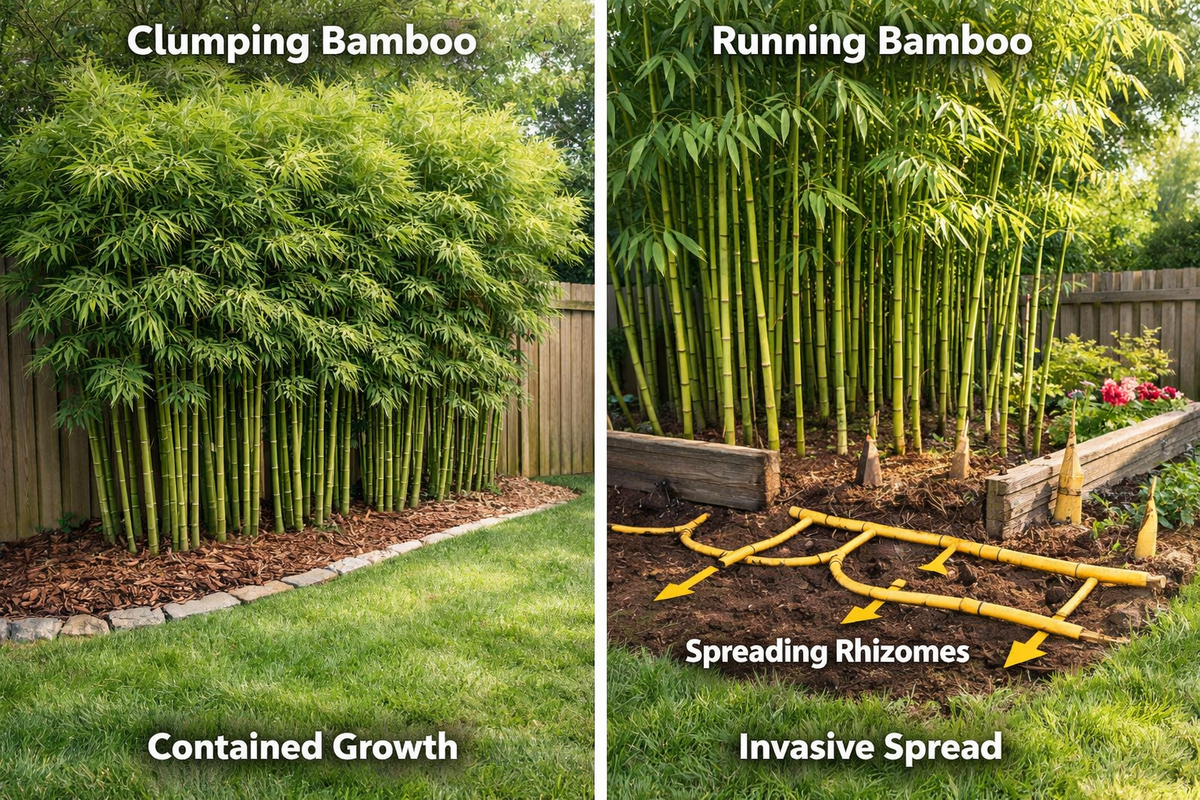
Bamboo has a reputation problem. Mention it in a garden group and you’ll hear stories of bamboo “taking over the yard,” popping up under fences, or showing up in a neighbor’s garden years later. Then you’ll see plants marketed as “non-invasive bamboo” and wonder: Is that real, or just a sales phrase?
Here’s the truth: “non-invasive” isn’t a strict scientific label in garden retail. It’s a shorthand that usually means clumping bamboo—the type that expands slowly in a tight circle—rather than running bamboo, which spreads aggressively via long underground rhizomes. Understanding the difference will save you money, stress, and awkward fence-line conversations.
Bamboo Basics: The Underground Rhizome Is the Whole Story
Bamboo spreads through rhizomes—underground stems that send up new shoots (canes). What makes bamboo “safe” or “scary” in a home garden usually comes down to how those rhizomes behave:
-
Clumping bamboo grows rhizomes that turn upward quickly, creating new canes close to the original plant.
-
Running bamboo grows long, horizontal rhizomes that travel outward before sending up shoots—sometimes meters away.
So when you hear “invasive bamboo,” people are typically talking about running bamboo.

Clumping Bamboo: Predictable, Privacy-Friendly, and Usually “Non-Invasive”
Clumping bamboo (often from genera like Bambusa and Fargesia) expands gradually. Instead of sprinting across your yard, it tends to widen like a slowly growing fountain—new shoots emerge close to the existing clump.
What to expect with clumping bamboo:
-
Expansion is slow and controlled (think centimeters, not meters, per year in most garden conditions).
-
Great for screens and hedges because it stays upright and can look lush year-round.
-
Generally doesn’t require extreme containment, though edging and good planning still help.
Why it gets called “non-invasive”:
Because clumping bamboo doesn’t send runners racing under fences, it’s considered far lower-risk in typical residential gardens. But “non-invasive” doesn’t mean “doesn’t grow.” It still expands—just in a more polite way.
Practical tip: Give clumping bamboo enough room from day one. If you cram it into a tiny strip, any plant will become a maintenance problem, bamboo included.
Running Bamboo: Fast Spreading, Harder to Control
Running bamboo (commonly in genera like Phyllostachys) is the one behind most horror stories. Its rhizomes are built to explore. In the right conditions, it can spread widely and send up shoots far from where you planted it.
What to expect with running bamboo:
-
Rhizomes can travel significant distances underground.
-
New shoots may appear unexpectedly, including near boundaries.
-
Containment usually requires a proper root barrier installed correctly (depth, material, sealed joins) and ongoing inspection.
If you’re in love with a running bamboo variety, it’s not automatically “evil”—but it’s a commitment. Without serious containment, it can become a long-term, expensive regret.

So What Does “Non-Invasive” Actually Mean in Real Life?
In practical garden terms, “non-invasive bamboo” usually means:
-
Clumping bamboo
-
Planted in a suitable spot
-
Maintained with normal gardening care
But there are important fine-print realities:
-
Any bamboo can be a problem in the wrong place
A clumping bamboo planted too close to paving, pipes, or a tiny courtyard can still create headaches—not because it “invades,” but because it grows bigger than expected. -
Climate and watering change growth speed
Warm, well-watered conditions can make even clumping bamboo expand faster (still clumping—just more enthusiastic). -
Labels aren’t always consistent
Some sellers use “clumping” and “non-invasive” interchangeably, and occasionally plants are mislabeled. Buying from reputable nurseries and knowing the botanical name helps.
How to Choose the Right Bamboo (and Avoid Regret)
If you want a privacy screen and low drama, choose clumping bamboo and plan ahead:
-
Look for labels that say “clumping” and confirm the botanical name.
-
Check the expected mature height and width (width matters!).
- Use mulch + deep watering while establishing for a fuller screen.
-
If planting near boundaries, leave a sensible gap and consider a root edge barrier for extra peace of mind.

Bottom Line
“Non-invasive bamboo” usually means clumping bamboo, not “bamboo that never spreads.” Clumping types expand slowly and predictably, making them a great choice for privacy screens and modern gardens. Running bamboo spreads via long underground rhizomes and often needs serious containment to behave.