What Is the Best Way to Grow Kentia Palms Indoors in Sydney?
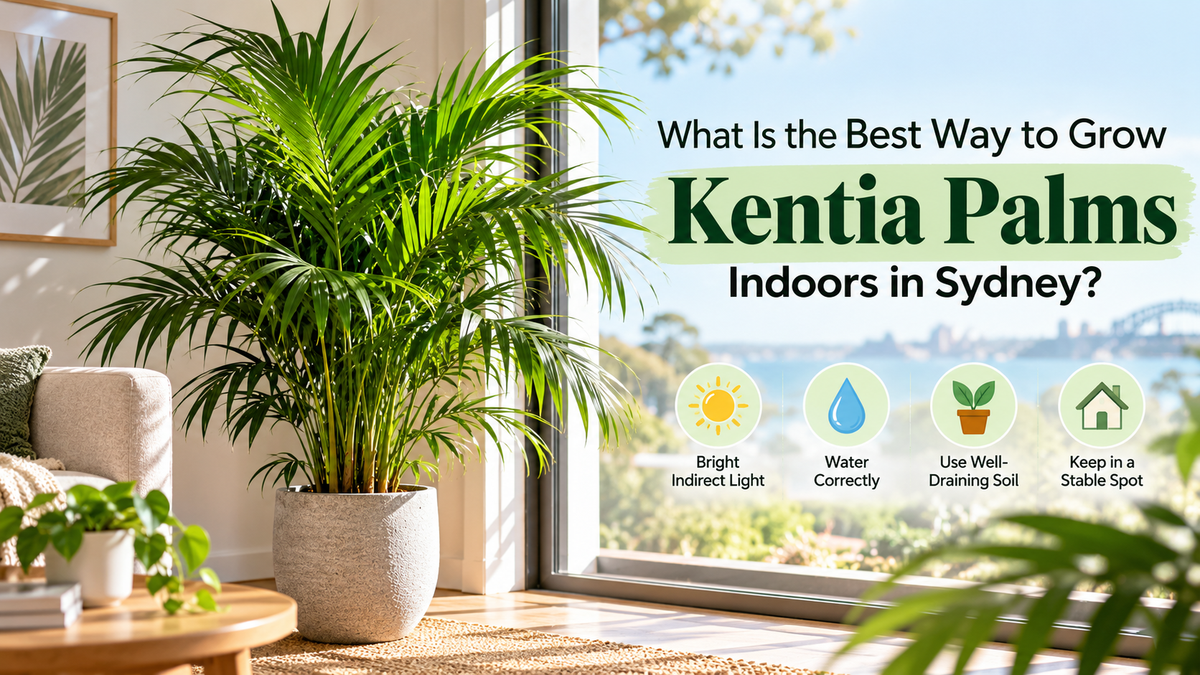
Quick answer: Place your Kentia palm in bright, indirect light. Water when the top 4 to 5 cm of soil feels dry. Use a well-draining palm mix. Keep it away from air-conditioning vents and leave it in one spot.
Key Takeaways
- A Kentia palm indoor setup needs bright, indirect light and a pot with drainage holes.
- Kentia palm watering depends on soil dryness, not a fixed schedule.
- Sydney summers need watering every 7 to 10 days. Winters need it every 2 to 3 weeks.
- Use a free-draining palm mix and repot every 2 to 3 years.
- Brown tips usually point to dry air or uneven watering.
- Kentia palms rank among the best indoor palms for Sydney homes.
Why Kentia Palms Suit Sydney Homes
A Kentia palm adds height, shape and calm to a room. It tolerates low light, handles dry indoor air and grows slowly, so it stays neat for years. If you want to know how to grow Kentia palms indoors, the method is simple. Give it the right light, water with care and avoid moving it often.
The Kentia palm (Howea forsteriana) comes from Lord Howe Island, off the New South Wales coast. In the wild, it grows under taller trees, so it adapts well to shade. This is why many growers rank it among the best indoor palms for Sydney homes.
Three traits make it reliable:
- It tolerates low and medium light.
- It handles dry indoor air better than most palms.
- It grows slowly, so you prune and repot rarely.
An indoor Kentia palm reaches 2 to 3 metres over many years. Expect only a few new fronds each year. Slow growth is normal.
Kentia Palm Indoor Care: Light
Light drives most of your Kentia palm indoor care. Bright, indirect light gives the strongest growth. Place your palm 1 to 2 metres from a north or east-facing window. In Sydney, north-facing glass delivers strong sun in summer, so filter it with a sheer curtain.
Good spots
- A bright living room with filtered light
- A hallway beside a window
- A bedroom corner with morning light
Spots to avoid
- Direct afternoon sun through glass, which scorches fronds
- Dark rooms with no windows
- Areas beside heaters or air-conditioning vents
A Kentia palm survives in low light, but growth slows and fronds thin out. Rotate the pot a quarter turn each month. This keeps growth even and stops leaning.
Kentia Palm Watering: How Often and How Much
Kentia palm watering is where most owners go wrong. Overwatering causes more damage than underwatering. Follow this routine:
- Push a finger 4 to 5 cm into the soil.
- If the soil feels dry, water until it runs from the drainage holes.
- Empty the saucer after 15 minutes.
- If the soil feels damp, wait a few days and test again.
In a Sydney summer, expect to water every 7 to 10 days. In winter, water every 2 to 3 weeks. Pot size, light and room temperature change this timing, so use the finger test, not the calendar.
Yellow lower fronds and a musty smell signal wet roots. Crisp brown tips often signal dry soil or low humidity.
Best Soil and Pot for Your Kentia Palm
Use a premium potting mix made for palms or indoor plants. It must drain well. Mix in a handful of coarse sand or perlite for extra drainage.
Pick a pot with drainage holes and a width 3 to 5 cm larger than the root ball. Kentia palms prefer snug roots. Repot every 2 to 3 years in spring. Handle the roots gently because they dislike disturbance.
Humidity, Temperature and Air Conditioning
Kentia palms grow best between 18 and 28°C. Most Sydney homes stay in this range through the year. Air conditioning dries the air and causes brown frond tips, so keep your palm clear of vents.
Wipe the fronds with a damp cloth every few weeks. This removes dust and lets the leaves absorb more light. Misting offers little benefit. A pebble tray with water, or a group of plants placed together, raises humidity more.
Feeding and Pruning
Feed in spring and summer with a slow-release palm fertiliser. Follow the label rate. Skip feeding in winter.
Remove only fully brown fronds with clean secateurs. Leave green fronds in place. Never cut the central growing point.
Common Kentia Palm Problems
- Brown tips: Dry air, uneven watering or salt buildup. Flush the soil with plain water every few months.
- Yellow fronds: Overwatering or poor drainage. Let the soil dry and check the pot holes.
- Fine webbing or sticky fronds: Spider mites or scale. Wipe the leaves and treat early.
- Leaning growth: Uneven light. Rotate the pot monthly.
Where to Buy a Kentia Palm in Sydney
The Bamboo Jungle is a palm tree nursery serving Sydney. Our Howea forsteriana Kentia palm arrives healthy and well rooted, ready for your room. Choose a size to suit your space, from compact pots to tall floor plants. We deliver across Sydney, so you skip the car trip and the lifting.
FAQs
1. How do I care for a Kentia palm indoors?
Place it in bright, indirect light. Water when the top 4 to 5 cm of soil feels dry. Use a free-draining palm mix and a pot with drainage holes. Keep it away from vents, feed in spring and summer, and rotate the pot monthly.
2. How often should I water a Kentia palm?
Water every 7 to 10 days in summer and every 2 to 3 weeks in winter. Check the soil first. If it feels damp 4 to 5 cm down, wait. Always empty the saucer after watering.
3. What are the Kentia palm light requirements indoors?
Kentia palms prefer bright, indirect light. They tolerate low light, but growth slows. Avoid direct afternoon sun through glass. A spot 1 to 2 metres from a north or east-facing window works well in Sydney.
4. What is the best soil for a Kentia palm?
Choose a well-draining potting mix made for palms or indoor plants. Add coarse sand or perlite for drainage. Heavy, soggy soil leads to root rot, so always use a pot with drainage holes.
Start Your Kentia Palm Indoor Journey
A healthy Kentia palm needs four things: bright, indirect light, careful watering, free-draining soil and a stable spot. Get these right and your palm grows steadily for many years. Browse the Kentia palm at The Bamboo Jungle and bring one home to your Sydney space.
Top 5 Blog topics
1. What Are the Benefits of Using Lilly Pilly as a Privacy Screen?
2. What Are the Best Bamboo Plants for Screening Privacy in Sydney?
3. Best Screening Plants for Noise Reduction from Roads & Neighbours
4. Decorative Pebbles Sydney: A Complete Buyer's Guide for 2026
5. Snow White Pebbles vs Black Polished Pebbles: Which Is Best for Sydney Gardens?
6. Best Egg-Shaped Planters for Modern Gardens in Sydney