Urban Seclusion: How to Achieve Total Privacy in Narrow Side Passages with Bamboo
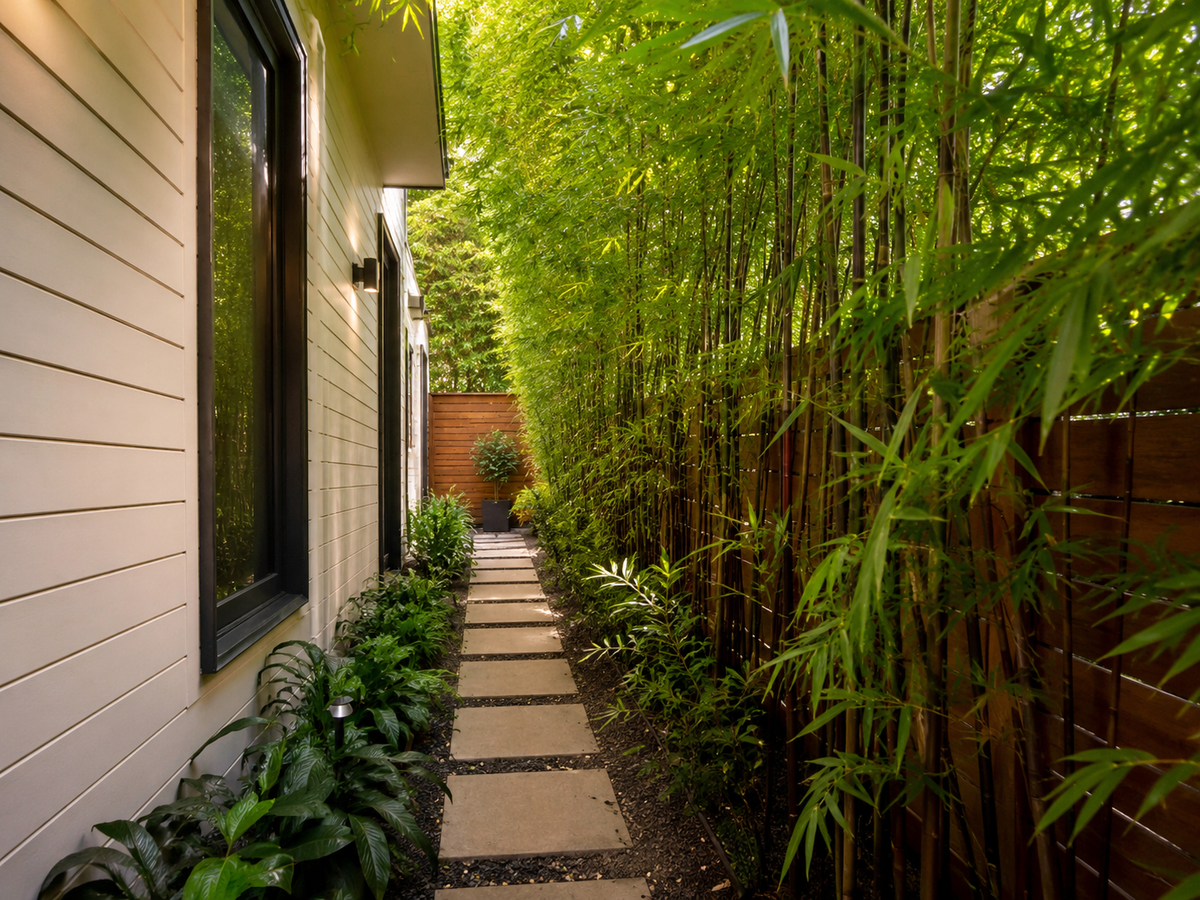
Narrow side passages are often treated as forgotten spaces. They can become storage zones, bare walkways, bin access points or awkward strips between the house and fence. Yet with the right planting and layout, these slim areas can become some of the most useful and attractive parts of a property.
For Australian home gardeners, landscapers and property owners, privacy is a common challenge in urban and suburban settings. Smaller blocks, two-story homes and close boundary lines can leave side windows, outdoor showers, bedrooms or entertaining areas exposed. A well-planned bamboo screen can turn a tight passage into a secluded green corridor while adding texture, movement and natural cooling.
The key is choosing the right bamboo, allowing enough room for healthy growth and designing the space so it remains practical as well as private.
Key Takeaways
- Narrow side passages can be transformed into private, functional garden spaces.
- Clumping bamboo is often the best choice for controlled screening in tight areas.
- Good plant selection, root space, drainage and maintenance are essential.
- Avoid overcrowding, poor species choice and planting too close to structures.
- A successful privacy screen balances height, density, access and long-term upkeep.
Why Narrow Side Passages Need Thoughtful Privacy Solutions
Side passages are usually long, slim and shaded for part of the day. They may also sit beside neighboring windows, fences or walkways, making privacy a priority. Traditional screens, such as lattice panels or solid fencing, can help, but they often feel harsh or reduce airflow.
Bamboo offers a softer, living alternative. Its upright growth habit suits narrow spaces, while its dense foliage can block unwanted views without making the area feel boxed in. The gentle movement of bamboo can also make a side passage feel calmer and more garden-like.
For example, a 1-metre-wide passage beside a bedroom window may not have enough room for a large hedge, but a carefully selected clumping bamboo in a contained bed or planter can provide height and coverage without sprawling across the walkway.

Choosing Bamboo for Tight Side Access Areas
Use Clumping Bamboo, Not Running Bamboo
One of the biggest misconceptions about bamboo is that all varieties spread aggressively. In reality, bamboo is generally grouped into two types: running and clumping.
For narrow side passages, clumping bamboo is usually the preferred option. It grows from a compact root system and expands gradually from the base. This makes it easier to manage near fences, paths and buildings.
Running bamboo can spread through underground rhizomes and is not suitable for most confined urban spaces unless professionally contained. If privacy is your goal and low-maintenance control matters, stick with suitable clumping varieties.
 Match the Bamboo Height to the Privacy Problem
Before choosing a plant, consider exactly what you need to screen. Are you blocking a neighbor's ground-floor window, a second-story balcony, a fence line or a view into an outdoor living area?
For fence-height screening, a medium bamboo may be enough. For overlooking from upper levels, a taller variety may be required. However, taller is not always better in a narrow space. Very large bamboo can feel overpowering and may require more regular thinning.
The ideal choice provides privacy at the right height while staying in scale with the passage.
Designing a Private Bamboo Side Passage
Allow Enough Width for Walking and Maintenance
A common mistake is planting too much into too little space. Even upright bamboo needs room for its culms, foliage and future growth. If the passage is used for access, leave a clear walking path for bins, tools, pets or garden equipment.
In very narrow areas, consider planting bamboo in a slim garden bed along one side only. In some cases, raised planters or troughs can work well, especially where soil is poor, drainage is difficult or roots need to be kept separate from paving.
 Improve Soil and Drainage Before Planting
Side passages often have compacted soil, construction rubble or limited sunlight. Bamboo is tough, but it still performs best in improved soil with reliable drainage.
Before planting, loosen the soil, add organic matter and check that water does not pool after rain. In heavy clay areas, raised beds can help prevent waterlogging. Mulch is also useful for retaining moisture and keeping roots cooler during hot Australian summers.
Combine Bamboo with Hard Landscaping
Bamboo works beautifully with simple materials such as gravel, steppers, timber edging, Corten steel, stone or rendered walls. These elements help keep the space tidy and functional.
A side passage does not need to be complicated. A clean path, a row of bamboo, discreet lighting and a neat mulch layer can completely change how the area feels.
Common Challenges and How to Avoid Them
Planting Too Close to Fences or Walls
Bamboo planted hard against a fence can become difficult to maintain. It may push foliage through gaps or make it hard to access the rear of the plant. Leave enough space for the clump to develop and for occasional pruning.
Choosing the Wrong Variety
Not every bamboo suits every side passage. Some grow too tall, too wide or too dense for small spaces. Others may need more sun than the area receives. Choose a variety based on mature size, light conditions, desired screening height and available root space.
When in doubt, speak with a bamboo specialist before planting. A good recommendation at the start can save years of frustration later.
Forgetting About Ongoing Care
Bamboo screening is relatively easy to maintain, but it is not maintenance-free. Remove old or weak culms, trim lower branches if you want a cleaner walkway, and water regularly while plants establish. Feeding during the growing season can encourage lush, healthy growth.
For a polished look, thin the clump every so often rather than letting it become congested.
Bamboo in Pots for Narrow Side Passages
Potted bamboo can be a practical option where garden beds are not possible. Large troughs can create instant privacy along a paved passage, courtyard edge or rental property boundary.
The container must be large enough to support healthy growth, with quality potting mix and excellent drainage. Potted bamboo will also need more frequent watering than bamboo grown in the ground, especially in summer.
Choose sturdy containers that suit the style of the home. Long rectangular planters often work well in tight spaces because they provide a neat, linear screen without taking up unnecessary room.
 Practical Example: From Exposed Walkway to Green Corridor
Imagine a narrow side path between a brick home and a paling fence. The neighbor's windows overlook the space, and the area feels bare and hot in summer.
By installing a slim planting bed along the fence, adding clumping bamboo, using stepping stones over gravel and placing low garden lights near the path, the passage becomes private, cooler and more inviting. The bamboo softens the fence, screens views and creates a sense of enclosure without needing a solid wall.
This kind of transformation is simple, but the impact can be significant.
Conclusion
Narrow side passages do not have to remain bare, exposed or purely practical. With the right bamboo variety and a thoughtful layout, they can become private, attractive and highly functional garden corridors.
For the best results, choose clumping bamboo, match the mature size to your space, prepare the soil properly and allow room for access and maintenance. Whether planted in the ground or grown in large planters, bamboo can provide fast, natural privacy while bringing softness and greenery to even the tightest urban spaces.
When planned well, a narrow side passage can become more than a walkway. It can become a secluded, calming part of the garden that improves privacy, comfort and everyday enjoyment.