Root Barriers for Clumping Bamboo: Do You Really Need One in Australian Gardens?
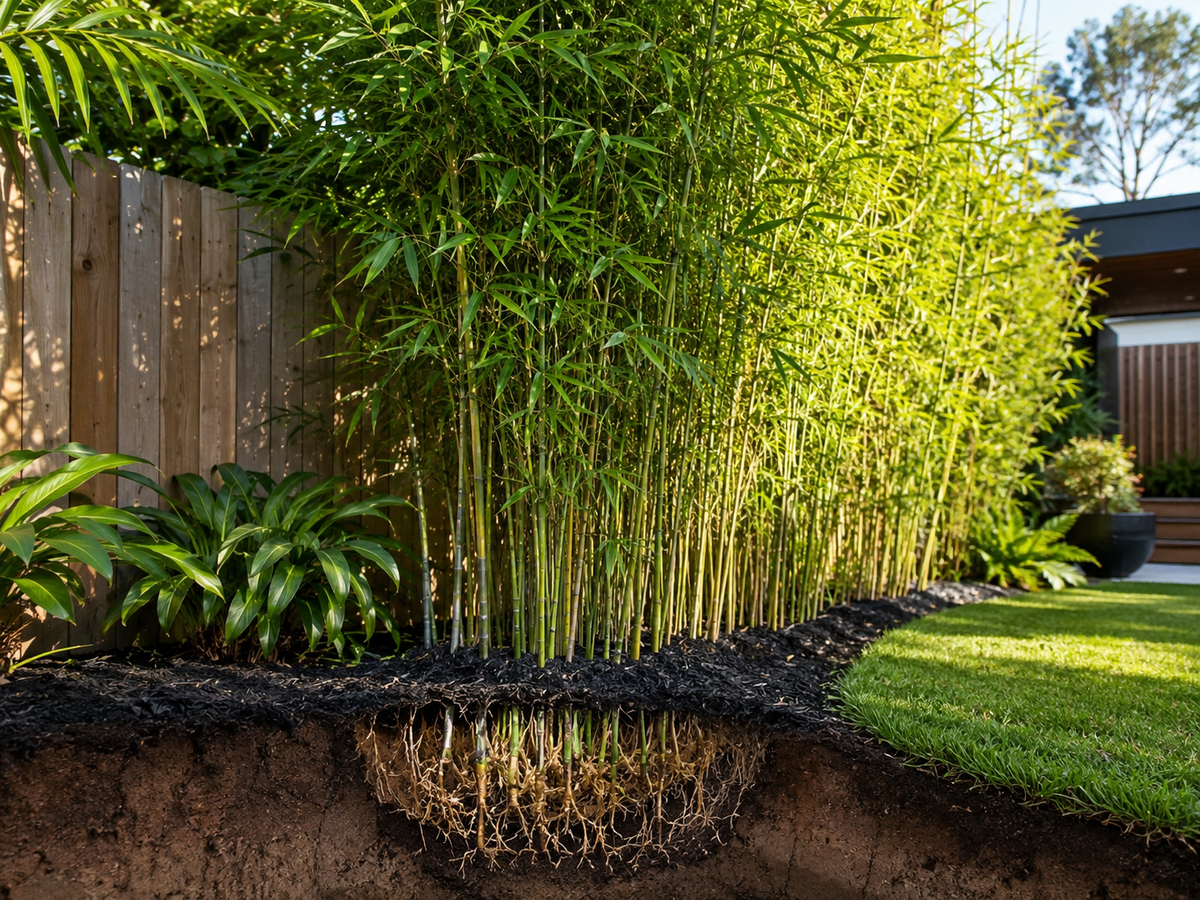
Planting bamboo is one of the fastest ways to create a lush, natural privacy screen, but many homeowners hesitate because they've heard stories about bamboo "taking over" the garden. One of the most common questions we hear at The Bamboo Jungle is whether clumping bamboo needs a root barrier before planting.
The short answer is usually no.
The confusion comes from the fact that not all bamboo grows the same way. Running bamboo can spread aggressively underground, while clumping bamboo varieties, such as Bambusa textilis 'Gracilis', develop compact root systems that expand slowly and predictably. Understanding this difference helps you choose the right plant, avoid unnecessary expenses and enjoy years of low-maintenance screening.
Key Takeaways
- Clumping bamboo does not spread like running bamboo.
- Most Bambusa varieties do not require root barriers.
- Proper planting and spacing are far more important than underground barriers.
- Selecting the right bamboo species prevents future maintenance issues.
- Healthy soil and regular care help bamboo establish faster and grow stronger.
Why Bamboo Gets a Bad Reputation
Many misconceptions about bamboo originate from experiences with running bamboo, which spreads using long underground rhizomes capable of travelling well beyond the original planting area.
Clumping bamboo behaves very differently.
Instead of sending roots several meters away, the rhizomes remain close to the parent plant, with new shoots emerging around the existing clump. Growth is gradual, controlled and easy to manage, making clumping bamboo one of Australia's most popular choices for residential screening.
This is exactly why varieties like Bambusa textilis 'Gracilis' are widely planted along fences, around pools and between neighboring properties.

Do Clumping Bamboo Plants Need Root Barriers?
For the vast majority of Australian gardens, no.
At The Bamboo Jungle, we often meet homeowners who are surprised to learn that installing a root barrier around clumping bamboo usually provides little practical benefit.
Unlike running bamboo, Bambusa species naturally remain contained. Their underground rhizomes grow slowly, allowing the plant to increase in size over many years without unexpectedly appearing elsewhere in the garden.
In many cases, spending money on a root barrier is less valuable than investing in:
-
organic mulch
-
consistent watering during establishment
-
correct planting distances
These factors have a much greater impact on the health and appearance of your bamboo than installing a physical barrier.
Situations Where a Root Barrier May Still Be Worth Considering
Although unnecessary for most residential landscapes, there are a few situations where a barrier can provide additional reassurance.
Very Narrow Garden Beds
Where planting space is extremely restricted, a barrier can help direct root growth and maintain tidy planting lines.
Commercial Landscaping
Landscape architects occasionally specify root barriers as part of larger commercial planting designs where long-term uniformity is important.
Close to Critical Infrastructure
If bamboo is being planted beside specialized drainage systems or other sensitive infrastructure, professional advice may recommend additional containment depending on the site.
Even in these situations, selecting the right bamboo species remains the most effective solution.

Common Mistakes Homeowners Make
Assuming All Bamboo Is Invasive
Perhaps the biggest misconception is believing every bamboo species spreads aggressively.
Choosing a genuine clumping bamboo completely changes the planting experience.
Planting Too Close Together
While bamboo creates excellent privacy, overcrowding plants reduces airflow and can affect long-term appearance.
Following recommended planting distances encourages healthier growth and a fuller screen.
Ignoring Soil Preparation
Healthy bamboo starts below ground.
Improving the soil with organic matter before planting encourages stronger root development and faster establishment.
Planting Tips for Long-Term Success
Creating a beautiful bamboo screen isn't complicated, but a few simple practices make a noticeable difference.
Choose the Right Variety
Select a species suited to your desired height, climate and available space.
Water During Establishment
New bamboo benefits from deep, consistent watering while roots develop.
Apply Organic Mulch
Mulch helps regulate soil temperature, retain moisture and reduce weed competition.
Remove Older Culms
Occasionally removing older canes encourages fresh growth and keeps your bamboo looking tidy.
As we regularly advise customers at The Bamboo Jungle, good planting practices are far more important than installing unnecessary barriers around clumping bamboo.

Why Clumping Bamboo Remains One of Australia's Favorite Screening Plants
For homeowners wanting year-round privacy, wind protection and lush greenery, clumping bamboo offers an excellent balance of beauty and practicality.
Its predictable growth habit means you can confidently plant it along fences, around entertaining areas and beside pools without worrying about aggressive underground spread.
Combined with regular watering, quality soil preparation and occasional maintenance, clumping bamboo provides a durable, low-maintenance screening solution that continues to improve with age.

Conclusion
Despite its reputation, clumping bamboo is one of the easiest and most predictable screening plants you can grow. Because varieties such as Bambusa textilis 'Gracilis' develop compact root systems, root barriers are rarely needed in residential Australian gardens.
Instead of focusing on unnecessary containment, invest your time in choosing the right species, preparing the soil well and following good planting practices. With the right start, clumping bamboo will reward you with a beautiful, low-maintenance privacy screen that enhances your outdoor space for many years to come.