Planting Large Feature Trees: Step-by-Step Guide for Success
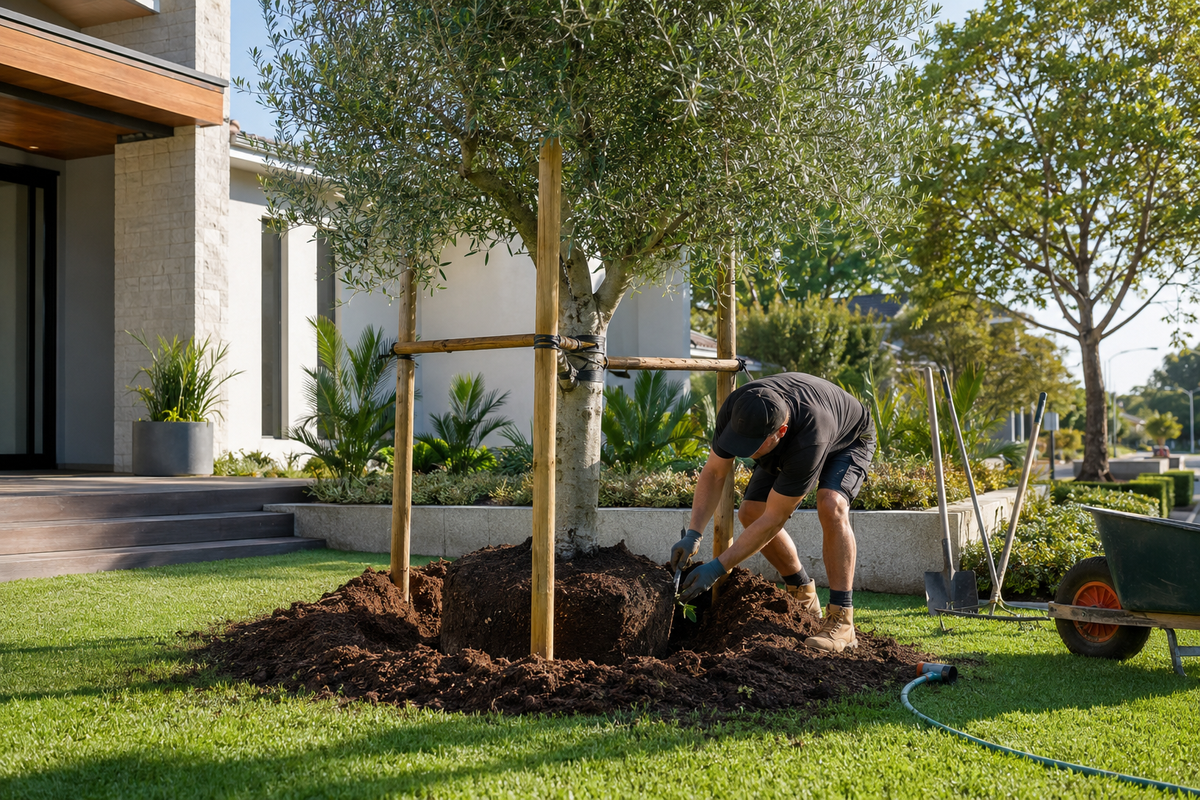
Large feature trees instantly add structure, character and long-term value to a landscape. Whether you're creating a striking entrance, adding shade to an outdoor entertaining area or establishing a focal point in your garden, proper planting is essential to help your investment thrive.
While mature trees provide an immediate visual impact, they require careful handling during installation. From selecting the right location to watering correctly during establishment, every step plays a role in the tree's long-term health.
This guide explains how to plant large feature trees successfully and highlights common mistakes to avoid, helping Australian homeowners and landscapers achieve the best possible results.
Key Takeaways
- Choose the right planting location before digging.
- Prepare the soil to encourage healthy root development.
- Plant at the correct depth.
- Stake only when necessary and remove supports at the right time.
- Water consistently during the establishment period.
- Apply mulch correctly to retain moisture and suppress weeds.
Choosing the Best Planting Location
Before purchasing a large feature tree, carefully assess your site.
Consider:
-
Available space at maturity
-
Sunlight requirements
-
Drainage
-
Nearby buildings and structures
-
Underground utilities
-
Existing landscape design
A mature Feature Olive Tree may become the centerpiece of a Mediterranean-style garden, while a Queensland Bottle Tree creates dramatic architectural interest in larger open spaces. Selecting the right tree for the available space helps reduce future maintenance.
Prepare the Soil Properly
Healthy roots begin with healthy soil.
Dig a planting hole approximately two to three times wider than the root ball while keeping the depth only slightly deeper than the root system. Wider planting holes allow new roots to spread more easily into surrounding soil.
If your soil is compacted or heavy clay, incorporate organic matter to improve drainage and soil structure. Avoid over-fertilizing during planting, as excessive nutrients can stress newly planted trees.

Position the Tree Correctly
Correct positioning is one of the most important steps.
Remove all packaging carefully without disturbing the root ball. Place the tree into the hole and ensure the root flare sits slightly above the surrounding soil level.
Planting too deeply is one of the most common reasons newly planted trees struggle. A buried trunk can encourage rot and restrict oxygen reaching the roots.
Before backfilling, rotate the tree until its best side faces the primary viewing angle, whether from the street, patio or main entertaining area.
Backfill and Water Thoroughly
Backfill using the existing soil unless the site has particularly poor conditions.
Lightly firm the soil as you go to eliminate large air pockets without compacting the ground excessively.
Once planted, water deeply to settle the soil around the roots. Deep watering encourages roots to establish further into the surrounding soil instead of remaining close to the surface

Should You Stake Large Feature Trees?
Not every tree requires staking.
Trees planted in windy locations or with large canopies may benefit from temporary support while roots establish. Use flexible tree ties that allow slight trunk movement, encouraging stronger root development.
Avoid tying supports too tightly, as this can damage bark and weaken the trunk over time.
Most staking can be removed after six to twelve months, depending on growth and site conditions.
Apply Mulch the Right Way
Mulch helps retain soil moisture, regulate soil temperature and reduce weed competition.
Spread organic mulch approximately 50–75 mm deep around the planting area while leaving a small gap around the trunk.
Avoid piling mulch directly against the bark, commonly known as "mulch volcanoes," as this may encourage disease and pest problems.

Ongoing Care During Establishment
The first year is the most important for newly planted trees.
Regular watering is essential, particularly during Australia's warmer months. Deep watering once or twice each week is generally more effective than frequent shallow watering, although requirements vary depending on rainfall and soil type.
Inspect the tree regularly for:
- Loose stakes
- Damaged branches
- Signs of pests
- Soil settling
- Weed growth
Prune only damaged or crossing branches during establishment unless professional structural pruning is required.
Common Planting Mistakes to Avoid
Many planting problems begin with simple oversights.
Common mistakes include:
- Planting too deeply
- Choosing the wrong location
- Overwatering or underwatering
- Leaving stakes on for too long
- Applying mulch against the trunk
- Ignoring drainage issues
- By avoiding these errors, your feature tree has the best chance of developing a strong root system and becoming a lasting landscape feature.

Conclusion
Planting a large feature tree is an investment that can transform your landscape for decades. By selecting the right location, preparing the soil carefully, planting at the correct depth and providing consistent aftercare, you'll give your tree the strongest possible start.
With thoughtful planning and ongoing maintenance, large feature trees such as Feature Olive Trees, Queensland Bottle Trees, Yucca rostrata and Bismarck Palms can become stunning focal points that enhance both the beauty and value of Australian gardens.