How to Water Drought-Tolerant Feature Plants (and Get the Soil Right)
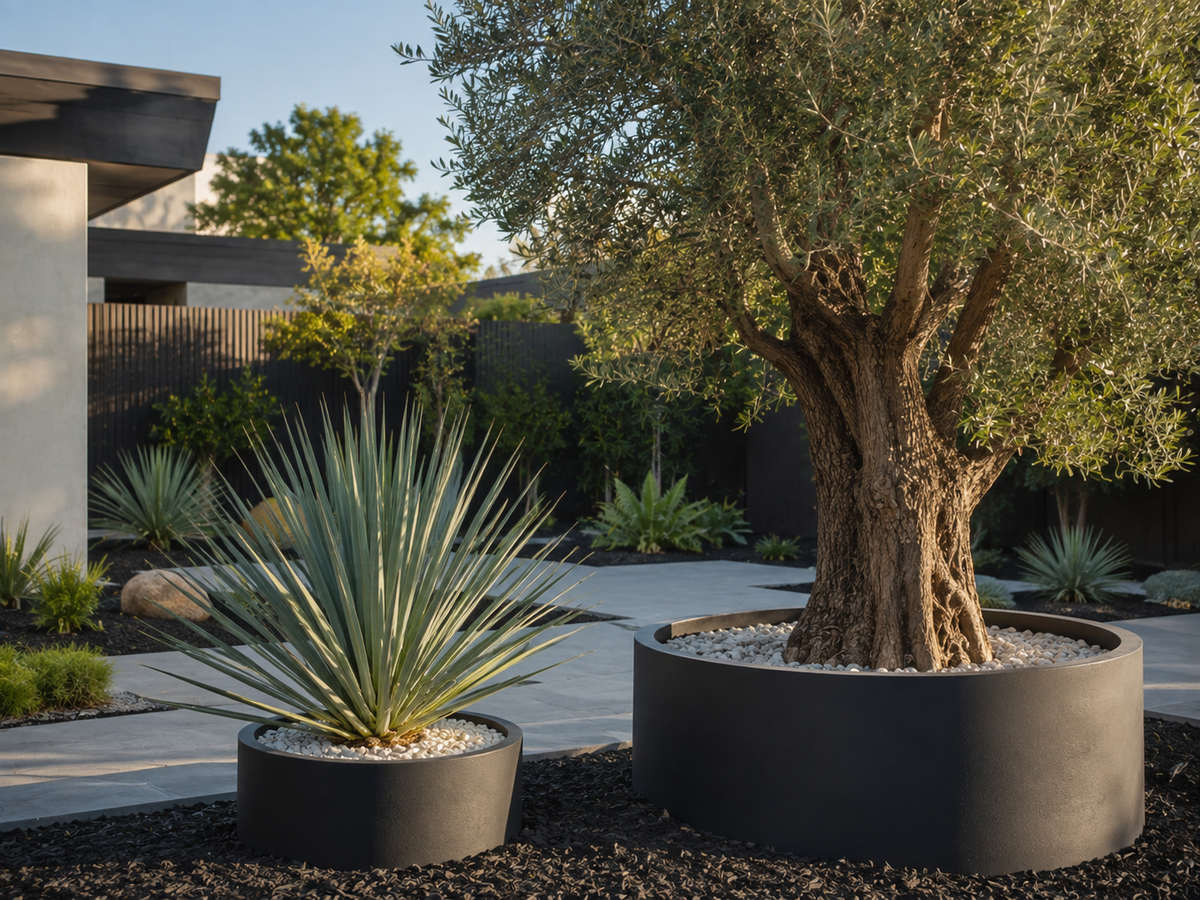
Drought-tolerant feature plants are a smart choice for Australian gardens. Varieties such as Feature Olive Trees, Yucca rostrata, Queensland Bottle Trees and certain palms deliver strong architectural shape while needing far less water than traditional garden plants once established.
Even the toughest plants, however, still need the right soil and a sensible watering approach — especially in the first one to two years. Too much water can be just as harmful as too little, and poor soil can undo the natural advantages these plants offer.
This guide shares clear, practical watering and soil tips that home gardeners can follow with confidence. The aim is healthy, long-lasting feature plants that look good while using water wisely.
Key Takeaways
- Drought-tolerant still means careful watering while plants establish.
- Free-draining soil or potting mix is essential — avoid waterlogging.
- Water deeply and infrequently to encourage strong root systems.
- Mulch is one of the most effective water-saving tools.
- Potted plants need more frequent checks than those in the ground.
- Simple habits in the first two years lead to years of lower maintenance.
Understanding What “Drought-Tolerant” Really Means
Drought-tolerant does not mean “never water”. It means the plant can survive and look attractive with less frequent watering once its root system is established. Young plants still need regular moisture while they settle in. After that, deep but infrequent watering encourages stronger, deeper roots that cope better with dry spells.
In most Australian climates, the critical period is the first 12–24 months after planting. Get the soil and watering right during this stage and the plant will reward you with lower maintenance for years to come.
Choosing and Preparing the Right Soil
Good drainage is the single most important soil requirement for almost all drought-tolerant feature plants. These species generally dislike “wet feet” and can suffer root problems if soil stays soggy.
For in-ground planting:
- Loosen the soil thoroughly in a wide area, not just the planting hole.
- Mix in a quality compost or soil improver to help structure, but avoid rich, water-holding mixes that stay wet.
- On heavy clay soils, create a slight mound or raised bed so water drains away from the crown.
- On sandy soils, add organic matter to improve water-holding capacity without creating waterlogging.
For pots and planters:
- Use a free-draining potting mix designed for trees, shrubs or natives.
- Avoid garden soil in containers — it compacts and drains poorly.
- Ensure the pot has large drainage holes and is raised on pot feet.

Watering New Feature Plants Correctly
Newly planted feature plants need consistent moisture while roots expand into the surrounding soil. A useful approach is:
- Water thoroughly at planting time so the entire root ball and surrounding soil are moist.
- For the first few weeks, check soil moisture every few days by pushing a finger 5–10 cm into the soil.
- Water deeply when the top layer feels dry, rather than giving light daily sprinkles.
- Gradually extend the time between waterings as the plant establishes.
Deep watering encourages roots to grow downward. Shallow, frequent watering keeps roots near the surface where they dry out faster.
Watering Established Drought-Tolerant Plants
Once established, most of these plants prefer to dry out a little between waterings. In many Australian gardens this means:
- Watering every 1–3 weeks in the warmer months, depending on rainfall, soil type and pot size.
- Reducing or stopping supplementary watering in cooler, wetter months.
- Giving a deep soak rather than a light surface spray.
Potted plants will always need more frequent watering than those in the ground because containers dry out faster. Large fibreclay or concrete planters hold moisture longer than small plastic pots, but still require regular checks during heatwaves.

Mulch – Your Best Water-Saving Tool
A 5–7 cm layer of mulch is one of the simplest ways to support drought-tolerant plants. Mulch reduces evaporation, keeps soil temperatures more stable and suppresses weeds that compete for water.
Good options include chunky bark, wood chip or mineral mulches such as gravel or pebbles (especially useful around architectural plants). Keep mulch a few centimetres away from the trunk or stem to avoid collar rot.

Special Tips for Potted Feature Plants
Feature plants in pots rely entirely on you for water. Follow these practical points:
- Choose the largest practical pot — bigger pots dry out more slowly.
- Check moisture by lifting the pot (lighter means drier) or using a finger test.
- Water until it runs freely from the drainage holes, then allow the top portion of mix to dry before watering again.
- In extreme heat, move sensitive pots to a position with afternoon shade if possible.
Common Challenges and Solutions
Yellowing leaves or soft growth
Usually a sign of overwatering or poor drainage. Reduce watering frequency and check that the soil or potting mix drains freely.
Dry, crispy leaf tips on new plants
Often underwatering during establishment. Increase deep watering temporarily and apply mulch.
Plants in pots drying out too fast in summer
Move to a larger pot, add mulch on the surface, and water early morning or late afternoon.
Slow growth after the first year
This can be normal for many drought-tolerant species. Avoid the temptation to overwater or over-fertilise — these plants often prefer leaner conditions.
Conclusion
Drought-tolerant feature plants can bring strong structure and year-round interest to Australian gardens while reducing water use. Success comes from matching the plant to free-draining soil, watering deeply but less often, and using mulch to protect moisture.
Focus on getting the first one to two years right. After that, most of these plants become remarkably self-reliant. With the simple soil and watering practices outlined above, you can enjoy healthy, attractive feature plants that suit both the climate and a lower-maintenance lifestyle.