Courtyard Palms: How to Create a Tropical Look Without Losing Space
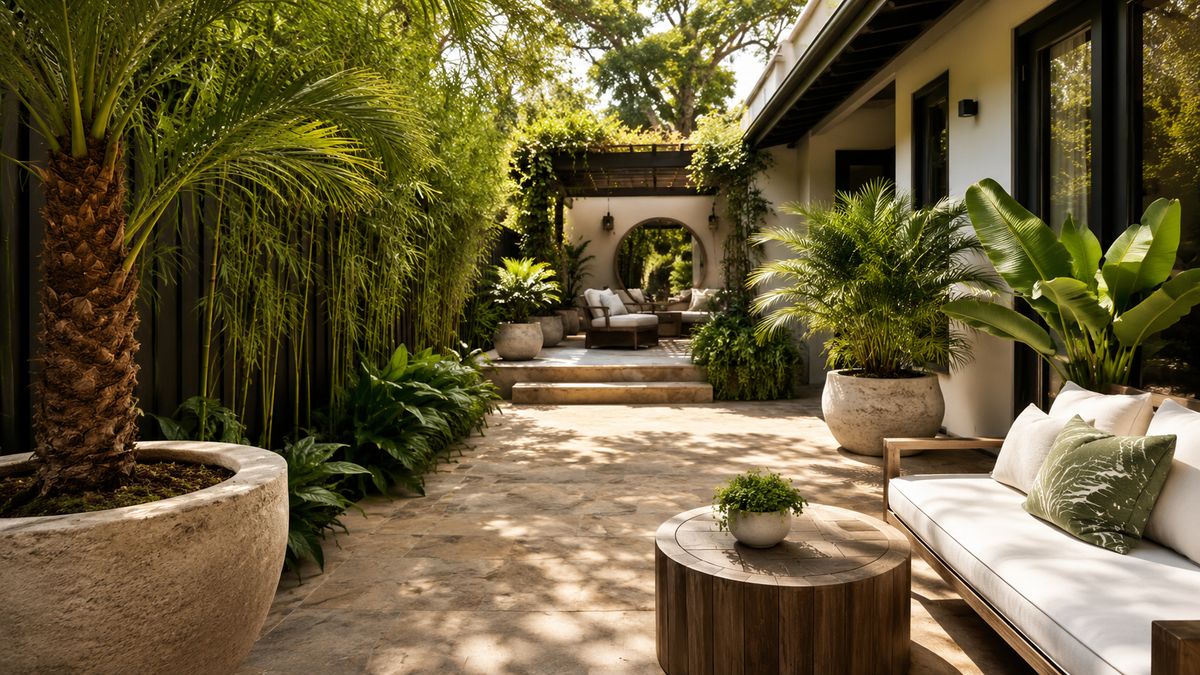
A courtyard may be compact, but it can still feel lush, cool and inviting. With the right courtyard palms, clever plant placement and a few smart design choices, even a narrow side path, townhouse courtyard or small patio can take on a relaxed tropical look without feeling crowded.
For many Australian home gardeners and property owners, the challenge is balance. You want greenery, privacy and that holiday-at-home atmosphere, but you do not want plants that outgrow the space, block light or make maintenance difficult. This is where compact palms, bamboo screening and layered foliage can work beautifully together.
Courtyard palms are ideal for adding height, movement and structure. Their upright growth habit gives you that tropical feel while using far less ground space than many spreading shrubs or canopy trees.
Key Takeaways
- Choose compact or slow-growing palms suited to courtyard conditions.
- Use pots, narrow garden beds and vertical planting to save floor space.
- Combine palms with bamboo, foliage plants and mulch for a layered tropical look.
- Avoid oversized palm varieties that may outgrow small spaces.
- Plan for light, drainage, airflow and future plant size before planting.
Why Palms Work So Well in Courtyards
Palms bring instant atmosphere. Their arching fronds soften hard surfaces such as paving, brick walls, concrete and rendered fences. In courtyards, where built structures often dominate, palms help create a cooler, more natural setting.
Many palms also grow vertically rather than spreading widely. This makes them useful for tight spaces where every square meter matters. A well-placed palm can frame a doorway, soften a boundary, shade a seating nook or add a focal point without taking over the garden.
Choosing the Right Courtyard Palms
Not every palm is suitable for a small courtyard. Some palms grow very tall, develop wide crowns or have aggressive root systems that are better suited to open landscapes.
Look for Compact Growth Habits
For courtyards, choose palms that stay relatively narrow, grow at a manageable pace and suit your local climate. Clumping palms, dwarf palms and slender trucking palms are often good options because they provide lush foliage without needing a large footprint.
Before buying, check the mature height and width, not just the size of the plant in the nursery pot. A palm that looks perfect at one meter tall may become too large in a few years if it is not suited to confined spaces.
Consider Light Conditions
Australian courtyards vary widely. Some receive strong afternoon sun, while others are shaded by buildings, fences or neighboring trees. Match the palm to the light available.
For hot, exposed courtyards, look for palms that tolerate sun once established. For shaded courtyards, choose varieties that handle filtered light or part shade. If your courtyard receives only a few hours of gentle morning sun, avoid palms that need full sun to thrive.
Think About Pots Versus Garden Beds
Potted courtyard palms are excellent when you want flexibility. They can be moved, grouped, replaced or rearranged as your garden develops. Pots also help control plant size, provided you water and feed correctly.
In-ground palms may grow more strongly and need less frequent watering once established, but they require more planning. Make sure the chosen position allows enough room for the trunk, fronds and root zone.

Space-Saving Design Tips for a Tropical Courtyard
A tropical courtyard does not need to be packed with plants. In fact, small spaces often look better when the design is simple and intentional.
Use Vertical Layers
Start with vertical structure. Palms can provide height, while bamboo can create privacy screening along fences or boundaries. Underplant with smaller foliage plants to soften the base and add texture.
This layered approach creates depth without using too much floor area. It also makes the courtyard feel fuller and more established.
Keep Pathways Clear
A common mistake is planting too close to walkways, doors or seating areas. Palm fronds may look light and graceful, but they still need room to move naturally.
Leave enough space for people to walk, sit and maintain the garden comfortably. In very tight areas, use tall, narrow pots against walls or corners rather than placing plants in the center of the space.
Repeat Plants for a Calmer Look
In small courtyards, too many different plant varieties can make the space feel busy. Repeating one or two palm varieties, paired with bamboo or a consistent underplanting, creates a more polished and spacious effect.
For example, a row of slim palms in matching pots can guide the eye along a wall, while a bamboo screen behind them adds privacy and greenery.

Combining Palms and Bamboo for Privacy
Palms are excellent for height and tropical character, but they are not always the best choice for full screening. Their trunks and open fronds can leave gaps, especially at eye level.
Bamboo can be a great companion plant because it provides dense vertical screening in narrow spaces. Clumping bamboo varieties are especially popular in Australian gardens because they are easier to manage than running types and can create a lush green backdrop.
Together, bamboo and palms create a resort-style effect. Bamboo provides the privacy and green wall, while palms add sculptural form and movement.
Common Mistakes to Avoid
Choosing Palms That Grow Too Large
One of the biggest misconceptions is that any palm will suit a courtyard if it starts small. Always consider mature size. Large palms can quickly overwhelm a courtyard, block light or become difficult to prune safely.
Ignoring Drainage
Palms in pots need excellent drainage. Waterlogged soil can cause root problems, especially in courtyards where airflow may be limited. Use quality potting mix, choose pots with drainage holes and avoid letting plants sit in saucers of water.
Overcrowding the Space
A tropical look does not mean filling every corner. Give each palm room to grow. Allow gaps for airflow and access. A few healthy, well-positioned plants will look better than a crowded collection competing for light and nutrients.
 Caring for Courtyard Palms
Courtyard palms are generally easy to care for when their basic needs are met.
Water regularly during hot weather, especially for potted palms. Containers dry out faster than garden beds, particularly in warm Australian summers. Mulch the soil surface to help retain moisture and reduce heat stress.
Feed palms during the growing season with a suitable slow-release fertilizer. Remove old or damaged fronds as needed, but avoid over-pruning. Palms rely on healthy green fronds to produce energy.
Keep an eye out for pests such as scale or mites, particularly in sheltered courtyards with limited airflow. Early treatment is much easier than dealing with a major infestation.

Conclusion
Courtyard palms are a smart way to bring tropical style into small Australian gardens without sacrificing valuable space. By choosing compact varieties, using pots or narrow beds, layering palms with bamboo and avoiding overcrowding, you can create a cool, private and inviting outdoor area that feels much larger than it is.
With thoughtful planning and the right plant choices, even the smallest courtyard can become a lush tropical retreat.