Potting Mix pH for Bamboo: Best Range for Healthy Growth (and How to Test It)
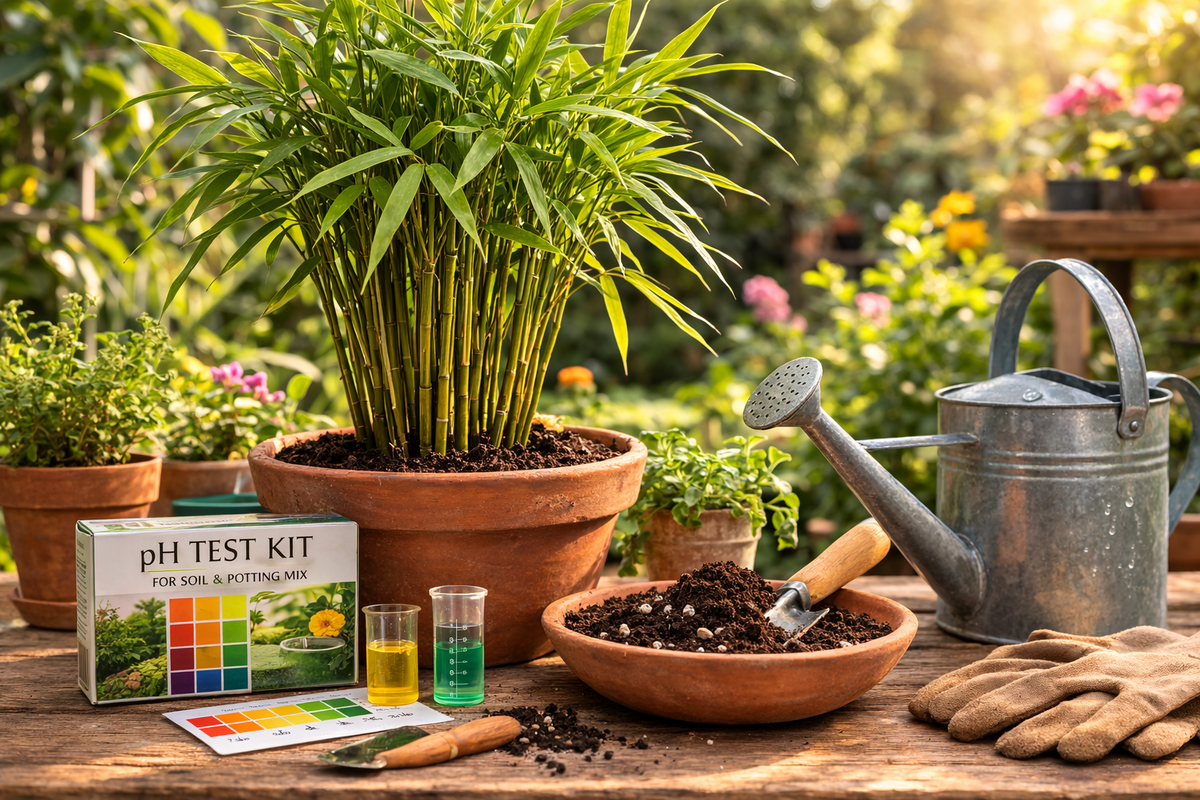
If your bamboo is in a pot or planter trough and it’s looking pale, slow, or a bit “stuck,” pH might be the hidden culprit. Potting mix pH affects how well bamboo can absorb nutrients—especially iron, manganese, and magnesium—so even if you’re watering and feeding correctly, the plant can still struggle if the pH is out of whack.
The good news: you don’t need to be a soil scientist. Once you understand the ideal pH range and how to check it, you can troubleshoot bamboo health much faster.
What pH Actually Does (In Plain English)
pH is a measure of how acidic or alkaline something is. In potting mix, pH controls how available nutrients are to plant roots. Think of it like a “nutrient access dial.” If the dial is set wrong, bamboo can’t access certain nutrients easily—even if those nutrients are present in the mix.
That’s why pH problems often look like nutrient deficiencies:
-
pale or yellowing leaves
-
weak new growth
-
slow thickening in screening bamboo
- leaf tip burn that doesn’t improve with watering changes
The Best pH Range for Bamboo in Pots and Planters
Most bamboos prefer slightly acidic to neutral conditions. In containers, a practical “sweet spot” is:
pH 6.0 to 7.0 (with 6.0–6.5 being a particularly comfortable zone for many varieties)
Why this range works: it generally keeps key micronutrients available while still supporting good overall nutrient uptake.
What happens when pH is too high (alkaline):
-
iron becomes harder to absorb → leaves may yellow (often the newer leaves first)
-
growth can slow even if you’re fertilising
What happens when pH is too low (very acidic):
-
some nutrients can become overly available and stress roots
-
mix structure can degrade faster depending on components
Potting mixes usually start in a plant-friendly range, but pH can drift over time—especially with repeated watering, certain fertilisers, or alkaline tap water.

Signs Your Bamboo Might Have a pH Issue (Not Just “Needs Fertiliser”)
It’s easy to assume bamboo problems are always water or food. Here are clues that point more toward pH:
-
Yellowing that persists even after feeding
-
New leaves looking pale while older leaves are less affected
-
Slow growth in warm seasons when bamboo should be active
-
“Chlorosis” look (yellow leaf with greener veins), especially in containers
Important: these symptoms can also come from overwatering, underwatering, compacted mix, or poor drainage—so pH is one piece of the puzzle, not the only suspect.
How to Check Potting Mix pH (Simple Methods)
You have a few practical options, depending on how accurate you want to be.
1.) Basic pH test kit (cheap and reliable enough)
These usually involve mixing a small amount of potting mix with water and adding a test solution or strip.
Best for: home gardeners, quick diagnosis, repeat checks.
2.) Digital pH meter (handy, but quality varies)
Some meters work well, others are wildly inconsistent. If you go this route, calibrate it and follow the instructions carefully.
Best for: frequent testing, larger setups (multiple planters).
3.) Lab test (most accurate)
Overkill for most home bamboo, but useful for commercial landscapes or persistent issues.
Best for: ongoing problems, big installations, or when you need certainty.
Quick how-to for DIY kits (works for most brands):
-
Take potting mix samples from a few spots in the pot (not just the top).
-
Remove chunky bark pieces so your sample is more consistent.
-
Mix with water as directed and test.
If your pot has been recently fertilised, wait a bit—some fertilisers can temporarily skew readings.

How to Adjust pH for Bamboo (Without Overcomplicating It)
Before you adjust anything, confirm the pH. Guessing leads to overcorrection.
If pH is too high (too alkaline):
-
Top-dress with compost and refresh the potting mix surface.
-
Consider switching to a fertilizer that supports slightly acidic conditions.
-
If your tap water is alkaline, occasional deep watering with collected rainwater (if available) can help reduce drift over time.
-
In stubborn cases, repot with a fresh premium mix designed for acid-loving plants or amend with materials recommended for gentle acidification.
If pH is too low (too acidic):
-
Repotting into a fresh, balanced premium mix is usually the simplest fix.
-
Avoid overusing acidifying fertilizers.
Pro tip: In containers, repotting is often the fastest reset because potting mix changes physically over time (it breaks down, compacts, and holds water differently).

Keeping pH Stable Long-Term (The Low-Maintenance Approach)
To help bamboo thrive in pots over the long run:
-
Use a premium potting mix with stable structure (bark/coir-based).
-
Mulch the top to reduce drying and temperature swings (which stress roots).
-
Feed with slow-release fertiliser during the growing season rather than constant strong liquid feeds.
-
Check pH once or twice a year, especially if you notice yellowing or slowed growth.
Watch your water source—consistent alkaline water can slowly push pH upward.

Final Takeaway
For container bamboo, aim for a potting mix pH around 6.0 to 7.0, test it when growth looks off, and adjust gently—often by refreshing mix, improving organic content, or repotting when needed. Once pH is in the right range, bamboo can actually use the nutrients you’re giving it, which usually means greener leaves, stronger canes, and faster thickening over time.