Combining Feature Plants: Yucca, Bottle Trees, Grass Trees & Olives for Stunning Australian Gardens
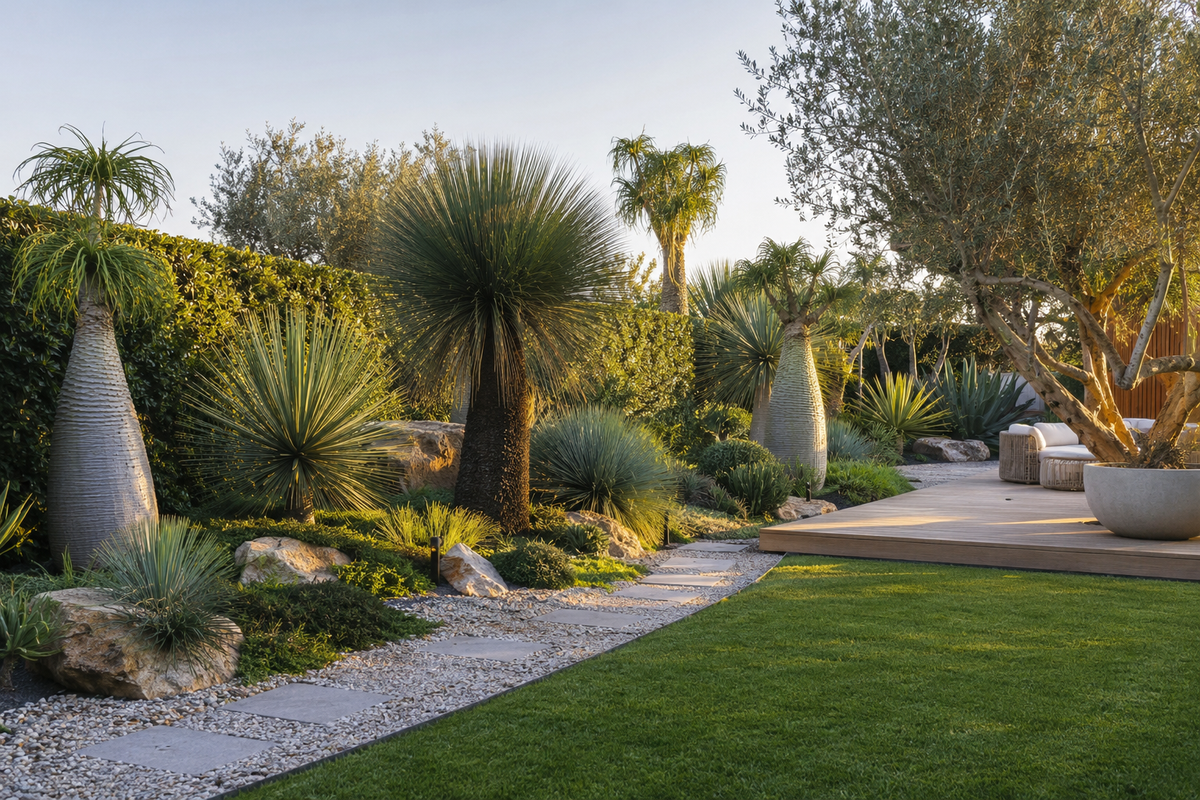
A memorable garden rarely relies on a single standout plant. Instead, the most impressive Australian landscapes combine complementary feature plants that offer contrast in shape, texture and colour while remaining practical for local conditions.
By thoughtfully pairing Yucca rostrata, Queensland Bottle Trees, Blue Grass Trees (Xanthorrhoea glauca) and Feature Olive Trees, homeowners and landscapers can create gardens that feel balanced, sophisticated and easy to maintain. Whether you're designing a new landscape or refreshing an existing garden, selecting the right combination of architectural plants can dramatically improve your outdoor space.
Key Takeaways
- Combine contrasting plant forms for greater visual impact.
- Balance bold architectural plants with softer foliage.
- Consider mature size before planting.
- Choose drought-tolerant combinations suited to Australian conditions.
- Use decorative gravel and mulch to unify the overall design.
- Allow enough spacing so each feature plant can become a focal point.
Why Combine Different Feature Plants?
Every feature plant contributes something unique to a landscape. Mixing complementary species creates year-round interest while preventing the garden from looking repetitive.
Some plants provide dramatic trunks, others offer striking foliage or sculptural silhouettes. Together they create layers that draw the eye across the landscape rather than focusing on a single point.
The result is a garden that appears professionally designed while remaining highly functional.
Understanding Each Feature Plant
Yucca Rostrata
Yucca rostrata is admired for its perfectly rounded crown of blue-grey leaves and upright trunk. Its symmetrical shape makes it ideal for modern gardens, minimalist courtyards and architectural landscapes.
Yuccas work particularly well near pathways, entrances and entertaining areas where their sculptural appearance can be appreciated.
Queensland Bottle Trees
Bottle Trees create an instant statement thanks to their distinctive swollen trunks and broad canopy.
They naturally become focal points in larger gardens and pair beautifully with lower-growing architectural plants. Their bold structure provides contrast against finer foliage while adding height and character.
Blue Grass Trees (Xanthorrhoea glauca)
Grass Trees bring a uniquely Australian aesthetic to any landscape.
Their textured trunks and blue-grey grassy foliage soften harder landscape elements like stone walls, paving and retaining walls. As they mature, they develop incredible character that suits both native and contemporary garden styles.
Feature Olive Trees
Feature Olive Trees are timeless additions to Australian gardens.
Their gnarled trunks, silvery-green foliage and Mediterranean appearance introduce elegance while complementing both modern and traditional homes. Mature olives provide texture throughout every season without overwhelming surrounding plants.

Creating Balance Through Shape and Texture
One of the biggest design principles used by professional landscapers is contrast.
Rather than planting several trees with similar forms, mix different silhouettes to create visual interest.
For example:
- Tall Bottle Trees provide vertical structure.
- Rounded Yucca crowns add symmetry.
- Grass Trees introduce texture.
- Olive Trees soften the landscape with airy foliage.
This combination creates natural movement while allowing every plant to stand out.
Decorative pebbles, mulch and carefully placed feature rocks further enhance the overall design and tie the planting scheme together.
Choosing the Right Layout
Before planting, think about how the garden will look in five to ten years rather than immediately after installation.
Position Larger Trees First
Bottle Trees usually become the dominant feature, so they should be positioned first.
They often work well:
- Near front entrances
- Within open lawns
- As centerpiece specimens
- At the end of long sight lines
Layer Medium and Smaller Features
After positioning larger trees, introduce Yuccas, Grass Trees and Olive Trees to build depth.
Avoid planting everything in straight lines. Instead, stagger plant positions to create a more natural and visually pleasing composition.
 Common Mistakes to Avoid
Combining feature plants is relatively straightforward, but several common mistakes can reduce the overall impact.
Planting Too Close Together
Young plants often appear small, but mature specimens require adequate space.
Allowing room for future growth prevents overcrowding and reduces maintenance.
Ignoring Scale
Large Bottle Trees can easily dominate compact gardens.
Match plant size to available space to maintain visual balance.
Too Many Feature Plants
Every specimen deserves room to shine.
Using fewer, carefully positioned plants often produces a stronger result than overcrowding the landscape.
Forgetting Ground Finishes
Decorative gravel, mulch and quality edging complete the design and help reduce weeds while improving moisture retention.

Keeping Your Landscape Low Maintenance
One reason these feature plants are so popular is their relatively low maintenance once established.
To keep the garden looking its best:
- Water deeply during establishment.
- Apply quality mulch to retain soil moisture.
- Remove damaged foliage as needed.
- Feed according to each plant's requirements.
- Refresh decorative gravel when necessary.
- Monitor drainage to prevent waterlogging.
Routine maintenance helps preserve the clean architectural appearance that makes these plants so appealing.
Bringing the Entire Garden Together
Feature plants work best when supported by complementary landscaping elements.
Consider including:
- Decorative pebbles or gravel
- Natural sandstone
- Timber decking
- Modern outdoor lighting
- Native groundcovers
- Clumping bamboo for privacy screening
- Ornamental grasses for movement
These additions create cohesion while highlighting the unique form of each feature plant.

Conclusion
Combining Yucca rostrata, Queensland Bottle Trees, Blue Grass Trees and Feature Olive Trees is an excellent way to create a landscape that feels both elegant and distinctly Australian. By balancing contrasting shapes, allowing adequate spacing and incorporating quality ground finishes, you can achieve a professional-looking garden that remains attractive throughout the year.
Whether you're designing a compact courtyard or a spacious backyard, carefully selected feature plants provide lasting structure, texture and visual interest. With thoughtful planning and ongoing care, these architectural favorites can transform ordinary outdoor spaces into stunning landscapes that are both beautiful and easy to maintain.