Black Mulch vs Natural Mulch: Pros, Cons, Appearance, and Performance
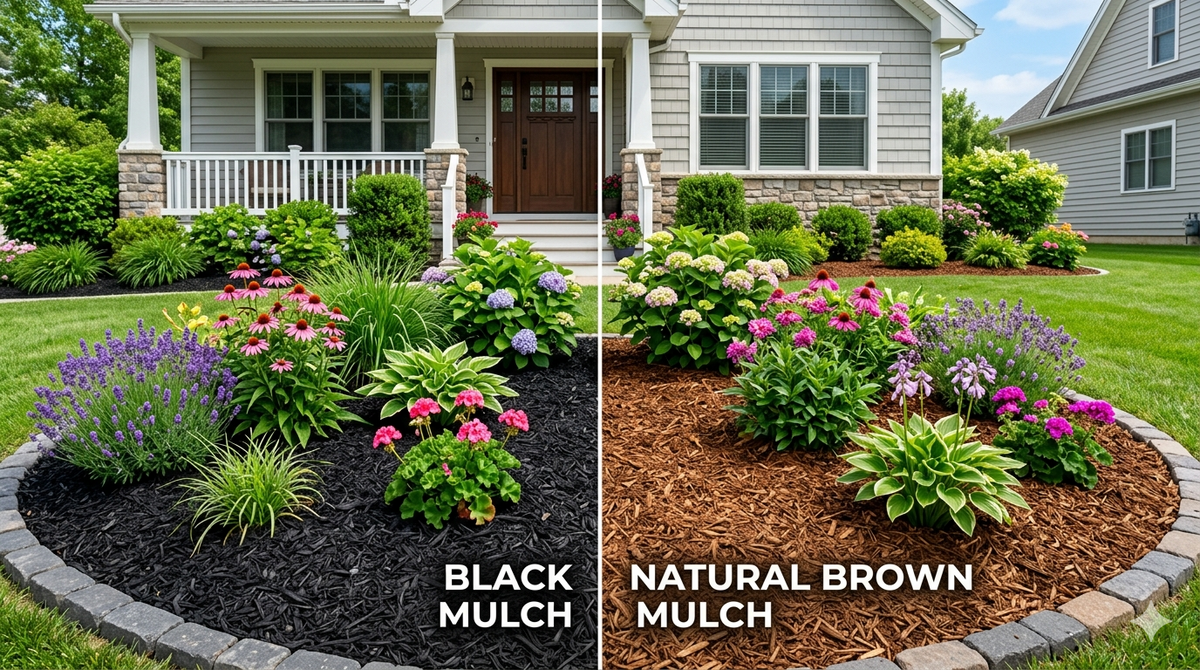
When choosing the best mulch for landscaping, many homeowners end up comparing black mulch vs natural mulch. Both options can improve the look of flower beds, help soil hold moisture, reduce weed growth, and protect plant roots. But when it comes to appearance, durability, and overall mulch performance, one may be a better fit for your yard than the other.
If your goal is bold curb appeal, black mulch often creates a more dramatic look. If you prefer a softer, more traditional style, natural mulch may be the better choice. The good news is that both types of mulch can work well in garden beds, around trees, and in foundation plantings. The key is understanding how they differ in style, upkeep, and performance over time.
What Is Black Mulch?
Black mulch is usually shredded wood or bark that has been dyed black to create a darker, richer appearance. It is commonly used in front yard landscaping because it gives flower beds a sharp, polished look. Against green shrubs, bright flowers, and lighter-colored homes, black mulch creates a strong contrast that many homeowners love.
From a design standpoint, black mulch works especially well in modern landscapes, clean-lined planting beds, and spaces where you want the mulch itself to enhance the overall look. It can make plants stand out more and can give even simple landscaping a more intentional appearance.
However, black mulch is often a more stylized choice. Some homeowners love that dramatic effect, while others feel it can look too dark or too artificial in certain settings.

What Is Natural Mulch?
Natural mulch usually refers to mulch in brown, tan, cedar, bark, or undyed wood tones. Because it looks closer to raw wood, it tends to blend into the landscape more naturally. This makes it a popular option for traditional homes, cottage-style gardens, backyard planting beds, and landscapes with a more organic feel.
One reason natural mulch remains so popular is that it complements almost any planting style. Whether you are mulching around shrubs, perennials, trees, or garden paths, it usually looks appropriate and understated. Instead of drawing attention to itself, it allows the plants and flowers to be the main focus.
Natural mulch also tends to age more gracefully. Since its color is already close to the color of real bark or wood, fading is less obvious over time.

Black Mulch vs Natural Mulch: Which Looks Better?
For homeowners searching which mulch looks best, the answer depends on the style of the landscape.
Black Mulch for Bold Contrast
Black mulch is often the top choice for people who want a crisp, high-contrast look. It pairs well with white houses, stone borders, bright flowers, and neatly shaped shrubs. If you want your landscape beds to look freshly defined and visually striking, black mulch can deliver that effect.
It is especially popular in:
- Modern landscaping
- Front foundation beds
- Homes with lighter siding
- Minimalist or formal outdoor designs
Natural Mulch for a More Timeless Look
Natural mulch is usually the better choice for a classic, earthy appearance. It blends well with almost any yard and tends to feel less harsh than dyed black mulch. If you want your landscaping to look warm, balanced, and natural, this option often has broader appeal.
It is especially popular in:
- Traditional home landscaping
- Cottage gardens
- Tree rings and backyard beds
- Rustic or woodland-style yards
In general, black mulch looks more dramatic, while natural mulch looks more organic. If you want maximum visual contrast, black mulch may look better. If you want a landscape that feels softer and more timeless, natural mulch often wins.

Black Mulch vs Natural Mulch: Which Performs Better?
When comparing black mulch vs natural mulch performance, both options can do the main jobs mulch is supposed to do. A good-quality mulch layer can help with:
- Moisture retention
- Weed suppression
- Soil insulation
- Reduced erosion
- Improved bed appearance
That said, there are still a few differences worth noting.
Moisture Retention and Weed Control
Both black mulch and natural mulch can help the soil stay moist and reduce weed growth when applied at the proper depth. In most cases, the type of wood and the quality of the mulch matter more than the color alone.
Soil Temperature
Because black mulch is darker, it may absorb more heat in full sun. In cooler climates, that can be helpful early in the season. In hotter climates, however, black mulch may contribute to warmer soil temperatures, which may not always be ideal for every plant.
Natural mulch tends to offer a more neutral effect, which makes it a dependable option for a wide range of climates and planting conditions.
Fading and Long-Term Appearance
One of the biggest differences in long-term performance is how the mulch looks as it ages. Black mulch can fade, which may make beds look less fresh over time unless the mulch is replaced or topped up. Natural mulch usually fades more subtly, so aging is less noticeable.
Soil Improvement
As natural mulch breaks down, many gardeners appreciate the way it contributes to the soil in a more natural-looking way. Black mulch can still decompose and benefit the bed, but homeowners who prioritize a more natural gardening approach often prefer undyed mulch products.

Is Black Mulch or Natural Mulch Better for Your Yard?
If you are choosing mulch based mostly on curb appeal, black mulch may be the better option. It offers strong contrast, a cleaner visual edge, and a more dramatic finish.
If you are choosing based on versatility, natural appearance, and lower-maintenance aging, natural mulch is often the better long-term choice.
For many homeowners, the best answer is this:
- Choose black mulch for bold, polished, high-contrast landscaping
- Choose natural mulch for classic, softer, more flexible garden design
Final Thoughts on Black Mulch vs Natural Mulch
In the debate over black mulch vs natural mulch, neither option is automatically better for every yard. The right choice depends on your home’s style, the look you want, your climate, and how often you want to refresh your mulch.
If you want landscaping that stands out, black mulch is a strong visual choice. If you want mulch that blends beautifully and still performs well season after season, natural mulch is hard to beat.
For most homeowners, the best mulch is the one that supports healthy plants while also matching the overall style of the landscape.